Chapter Five: The Third Crossing — Puerto Rico
After decades of reinvention — Russia to America, physics to economics, student to Stanford MBA to executive at Uber, Tesla, Waymo, and Revolut — Vasily Starostenko did something nobody expected.
He moved to Puerto Rico.
A Spanish-speaking Caribbean island. A third language. A third culture. A third beginning. The same pattern as before: move toward the unfamiliar, and build.
But this time, the building would be personal. This time, there would be no corporate hierarchy, no board, no layers between decision and result. This time, he would be the owner — fully, completely, without qualification.

Why Puerto Rico?
People ask why. The answer is not a single reason but a convergence — the kind of convergence that, in retrospect, looks inevitable.
Puerto Rico offered something the previous chapters could not: a place to build that is also a place to live fully. Not a campus. Not a corporate headquarters. A home — with an ocean, a culture, a language to learn, and a pace that strips away everything performative about work and leaves the part that matters.
There was also the builder's logic. After years of operating inside large organizations — however senior the role, however real the impact — there is a pull toward the pure form: building something that is entirely yours, where the feedback loop is immediate and the responsibility is total. Puerto Rico, with its vibrant local economy, its bilingual reality, and its distance from the Silicon Valley echo chamber, was the right ground for that.
And there was the pattern. Look at his life: Russia to America was the first crossing. Each crossing had made him larger — not by replacing what came before, but by adding a new layer. The physicist gained an economist. The economist gained a business leader. The business leader, it turned out, had one more layer to add: the owner-operator, the founder, the man who builds in a third language on a Caribbean island.
He had learned the formula: choose the hard crossing, accept being a beginner, apply the swimmer's discipline, integrate rather than replace. Puerto Rico was the next iteration.
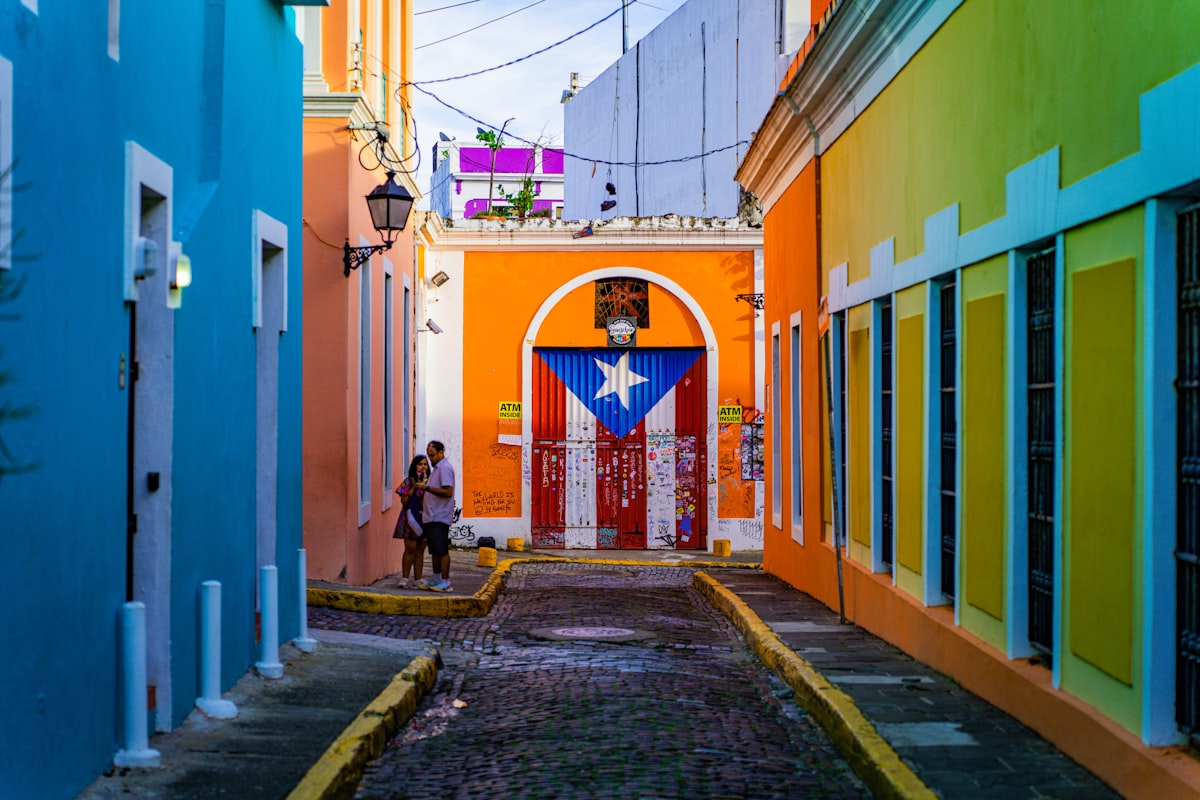
The Third Language
Living and working in a Spanish-speaking environment changed the rhythm of daily life completely. Business happens in two languages now — sometimes in the same conversation. Customers, suppliers, neighbors: every interaction is practice, every day is immersion.
He had already learned what it takes to start over in a new country. Puerto Rico asked him to do it again — this time in Spanish, on an island with its own pace, its own rules, its own deep culture.
The Spanish learning was not academic. It was survival and then it was joy. The early days were the familiar humiliation of the beginner: the thought complete in your head, the words inadequate in your mouth. But he knew the method. Daily effort. Honest measurement. No shortcuts. The same discipline that learned English, that survived MIPT, that won ten swimming championships.
And then came the moment every language learner lives for: the joke that lands. The negotiation conducted entirely in Spanish. The poem — because yes, there would be a poem — written in Spanish about pitorro de coco, the island's traditional moonshine, posted to Facebook from a conference room literally named "Pitorro." The language stopped being a barrier and became a home.
His Facebook posts from this period tell the story in his own words — bilingual, playful, fully inhabited. A reel set to Russian synth-pop with Spanish translation included. A Russian meme carousel shared with island friends. The trilingual mind at play: Russian soul, English profession, Spanish daily life.

Building: Sleep Shop and Callpages
This time, the building is personal in a way the California years never were.
Vasily owns Callpages (callpages.me) — the product platform he is developing as his own venture. The idea is disarmingly simple: every business deserves a great call page. Not a bloated website, not a social profile rented from a platform — a clean, fast page whose entire job is to turn a visitor into a phone call. After two decades in product, he knows where revenue actually happens for most local and service businesses: in the conversation. Callpages puts the call button front and center and strips away everything that gets between a customer and the business they want to talk to.
And he runs Sleep Shop — a metal bed-frame business in San Juan. New-in-box metal bed frames: Twin, Queen 6-inch, King 6-inch, and King 10-inch models, with pickup in San Juan. It is a different kind of work than scaling global product teams. Local. Physical. Hands-on. Loading frames. Talking to customers face to face. Solving real problems for real neighbors.
But the instincts are identical — understand what the customer needs, remove friction, deliver something better than what was there before. Whether the product is a driverless fleet or a bed frame, the discipline is the same: measure first, argue with data, never mistake motion for progress.
What draws him to this chapter is the builder's joy in its purest form. No layers of corporate hierarchy. No abstraction between decision and result. When Sleep Shop gets a bed frame to a customer, the feedback is immediate and real. When a Callpages feature ships, he knows within hours whether it works. It is the startup trench work he did as a founder years ago — rediscovered in the Caribbean, with better weather.

The Certificate: The Island Says Yes Back
In November 2024, the island chapter became official in a way that stopped him — and everyone who follows his story — in their tracks.
Puerto Rico's Department of State issued him a Certificate of Puerto Rican Citizenship. The document is formal and beautiful: "CERTIFICADO DE CIUDADANÍA," issued by the Gobierno de Puerto Rico, Departamento de Estado, in San Juan, under Regulation No. 7347 and Article 10 of the Political Code of Puerto Rico. Signed by Secretary of State Omar J. Marrero Díaz. Valid through November 14, 2029. And the name on it: "Vasily Star."
He shared it on Facebook — his professional account, @vasilys, some 1,500 followers — with a caption in the two languages he now lives in: "Trabaje duro y recibí que merezco! I worked for it hard and I got what I deserved." With a Puerto Rican flag emoji.
Read that caption again. It is not the polished prose of a press release. It is a man speaking from the heart in two languages at once — the Spanish slightly unpolished, the English direct, the emotion unmistakable. I worked for it hard and I got what I deserved.
For a man who crossed an ocean to start over — twice — the document was not paperwork. It was the island saying yes back. After Russia said "be rigorous." After America said "prove yourself." Puerto Rico said: you belong here. Formally. Legally. Under our own law.
Think about the arc: born in Russia, became American, now Puerto Rican. Three citizenships of the heart, each one earned. Each crossing had asked everything of him — the language, the culture, the starting over. And each place, eventually, had recognized what he brought.
The certificate now sits among his most treasured documents — not because of what it allows, but because of what it means. Belonging, freely given and fully earned.
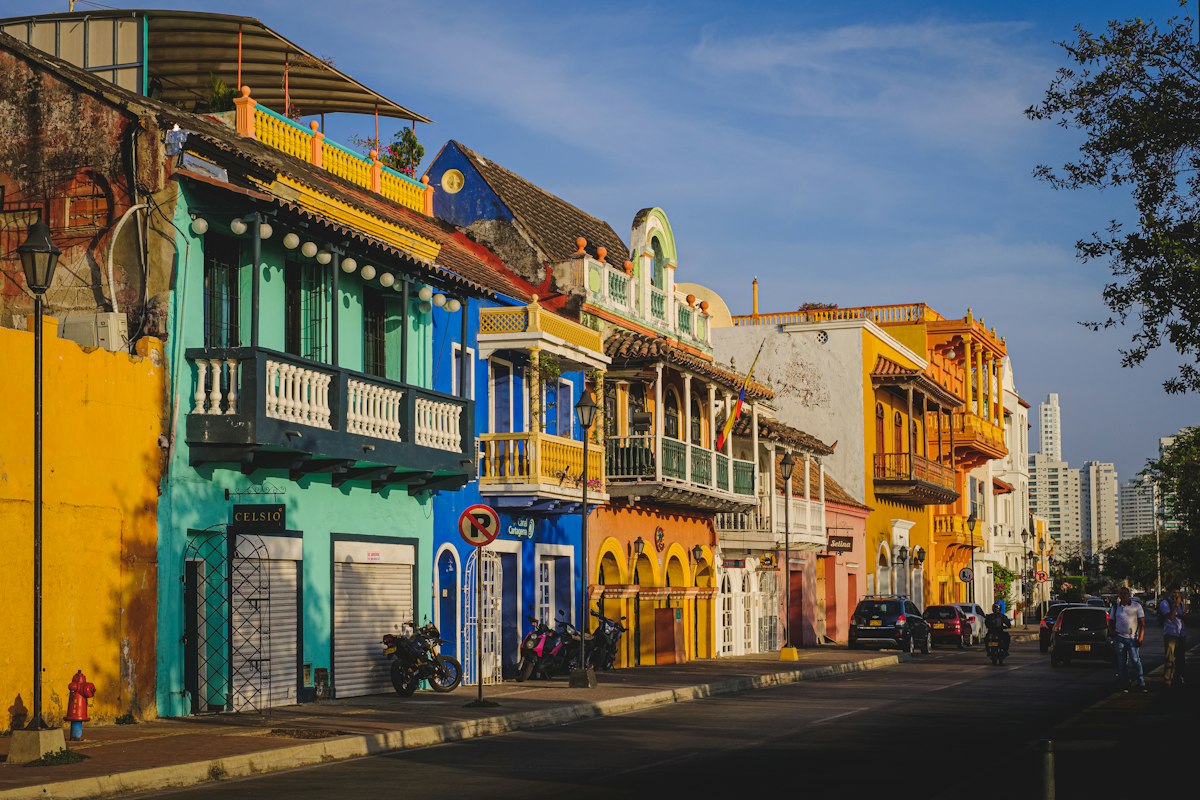
The Rhythm of the New Life
Daily life in Puerto Rico runs at a different tempo than the startup cities he worked in before, and that is the point — not a bug but a feature.
Mornings start early. The discipline survived the crossing: the swimmer still wakes before the sun, still does the work that moves the clock. But now the work happens with the ocean nearby, with the sound of coquíes in the evening, with a culture that understands something Silicon Valley often forgets — that a life is not a funding round, and that vivir bien (living well) is not the reward for work but part of the work itself.
Business happens in person. On an island, reputation is local and immediate. You cannot hide behind a brand; you are the brand. When Vasily delivers a bed frame or ships a Callpages feature, the customer knows exactly who built it. That accountability — total, personal, inescapable — is the purest form of the builder's craft.
And the learning never stops. Spanish deepens. The island reveals new layers. The businesses grow. Each day is both familiar — the discipline, the measurement, the honest work — and new: a new word, a new customer, a new understanding of how this place works.
In June 2024, he earned a seminar certificate from Digitize 3.0 — the Puerto Rico Department of Economic Development and Commerce's program on eCommerce strategies for small and medium businesses, signed by Secretary Manuel Cidre Miranda. Even here, even now, the student shows up. The MIPT habit: learn the system before you try to master it.

The Bilingual Business
There is a dimension of the Puerto Rico chapter that deserves its own attention: what it means to run businesses in two languages.
Every business Vasily operates now lives in both English and Spanish. Sleep Shop customers might call in either language. Suppliers negotiate in Spanish. The Callpages product serves a global audience in English while its owner lives in a Spanish-speaking market. Contracts, conversations, customer support — the bilingual reality is not a feature of the businesses. It is the water they swim in.
This does something to a product person. It strips away the lazy assumptions. When you have to explain your value proposition in a second language, you discover which parts were clear and which parts were just jargon. When your customer can switch languages mid-sentence, you learn to listen for meaning rather than words. Clarity — real clarity, the kind that survives translation — becomes not a nice-to-have but a survival skill.
It also changes how you think about markets. Most Silicon Valley products are built for an English-speaking user who thinks like the builder. Operating bilingually forces the opposite: the builder must think like users who do not think like him. That empathy — earned daily, in every transaction — is worth more than a hundred user interviews.
And there is a joy in it too. The moment when a complex negotiation concludes successfully in your third language. The customer who switches to English to make sure you understood, and you answer in Spanish to make sure they know you did. The small daily victories of the trilingual life — each one a reminder that the beginner's humiliation was worth it.
Not a Retreat — An Iteration
Moving to Puerto Rico was not a retreat from his career. Anyone who thinks so misunderstands both the man and the move.
It was the next iteration of a life built on one principle: keep learning, keep building, and never be afraid to be the new guy in the room. The island gave him a new language to learn and new businesses to build. He took both — the way he took MIPT, the way he took English, the way he took Uber's marketplace and Waymo's autonomy challenge.
The pattern holds: choose the hard crossing, accept being a beginner, apply the discipline, integrate rather than replace. The physicist is still there. The economist is still there. The Stanford MBA, the Uber operator, the Tesla builder, the Waymo patent-holder, the Revolut executive — all still there, all informing every decision.
But now there is a new layer: the Puerto Rican. The man who earned a certificate that says "Vasily Star" and means you belong. The businessman who operates in Spanish. The owner who answers his own phone.
The third crossing is complete. But the story is not over — because now comes the daily reality. The life in San Juan. The ocean mornings. The businesses. The jazz nights. The beaches. The ongoing, ordinary, extraordinary work of building a life — not just a career — on an island that said yes.

San Juan is home now. And home, it turns out, was worth every crossing.
---
Vasily Starostenko builds and advises from San Juan, Puerto Rico. He welcomes conversations about building businesses, navigating new cultures, and the art of starting over — in any language.
Continue the conversation: Phone: +1 (650) 523-4953 — tap the call button to reach him directly.
Vasily Starostenko — Consulting
Hablar ahora — llamada gratuita