Chapter Two: The Forge — MIPT, Moscow, and the Making of a Mind
Some universities teach you a subject. The Moscow Institute of Physics and Technology — MIPT, known to its students and alumni as Phystech — teaches you how to think under conditions that would break most people. It does not do this gently. It does this the way the pool did: by being completely, unblinkingly honest about where you stand.
Vasily Starostenko spent six years there, from 1998 to 2004, and left with a Master's degree with Honors in Physics. Six years. In the hardest technical school in Russia — a school whose reputation among physicists is not hype but simple description. To understand what those six years did to him, you have to understand what MIPT is.
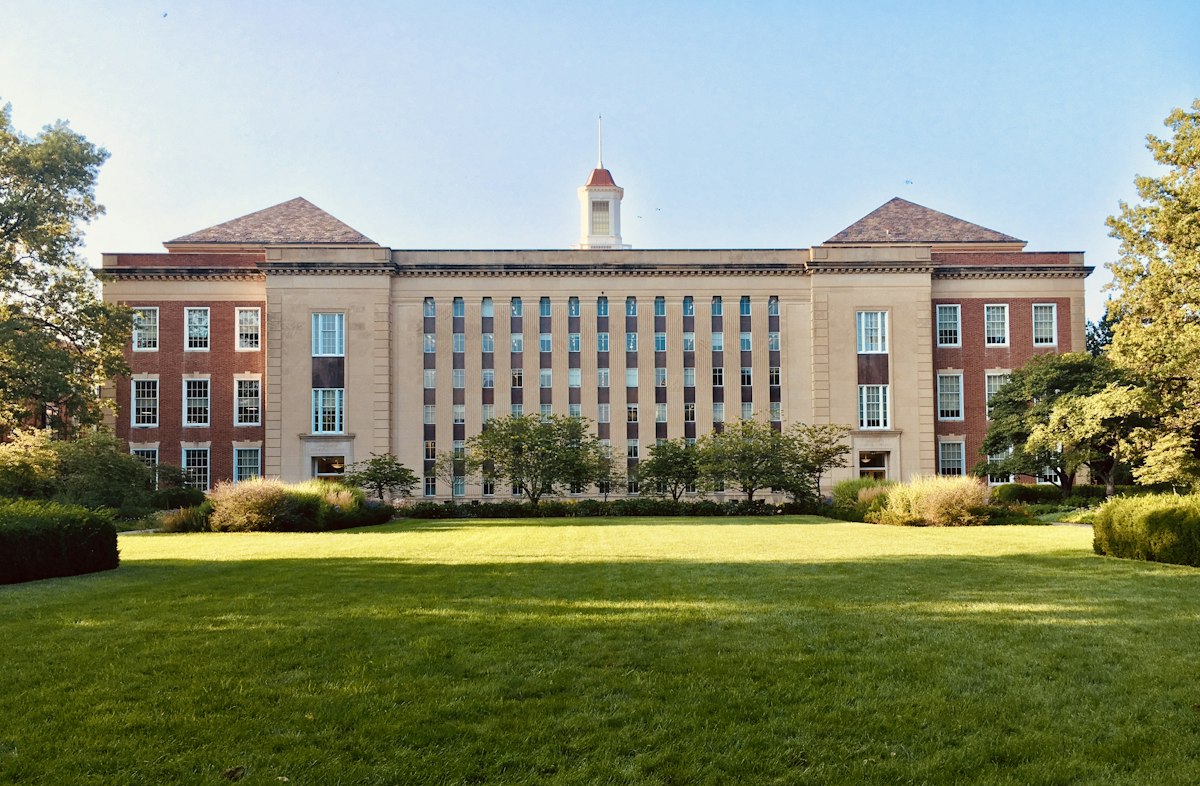
Phystech: Where Brilliance Goes to Be Tested
MIPT's system is famous — or infamous, depending on whether you survived it — for drilling students in theoretical physics and mathematics at a depth most programs never attempt. The curriculum does not ease you in. It assumes you are serious, and then it tests that assumption daily, for years.
The students who arrive at MIPT were the best at their schools. The cleverest kids from every physics-and-math program in the country. And then, in the first semester, most of them discover what it feels like to be average — or worse — for the first time in their lives. The problems are designed to be hard in a way that exposes not just what you do not know, but how you think when you do not know. Can you derive from first principles when memory fails? Can you hold a multi-step argument in your head without losing the thread? Can you sit with a problem for hours — for days — without flinching?
Vasily could. Or rather: Vasily learned to.
Surviving MIPT required exactly the same discipline he had built in the swimming pool: long hours, honest measurement of where you actually stand, and the willingness to do the hard repetitions nobody sees. The lecture hall replaced the lane. The problem set replaced the interval workout. But the structure was identical — show up, do the work, measure honestly, repeat.

And he did all of that while competing at an elite level in the pool. This is the part that still stops people when they hear it. Vasily swam for the MIPT swimming team and became a tenfold Champion of the Moscow Region — ten times. A feat that meant balancing brutal training schedules with an academic workload that was already, by itself, more than most people could handle.
Think about what that actually required. MIPT's problem sets could consume an entire weekend. Swimming training consumed the early mornings and often the evenings. There were no shortcuts available in either domain — the physics professor and the stopwatch were equally immune to excuses. So he did both. Fully. For years.
Few people graduate from MIPT at all. Fewer still do it with honors. Almost nobody does it with honors while winning ten regional swimming championships. But Vasily Starostenko did, because the wiring installed in childhood — the swimmer's discipline, the physicist's honesty — was now running at full power.
The Mental Operating System
What MIPT gave him was not just physics. It gave him a mental operating system — a way of approaching any complex problem that he has used every day since, in every company, on every product.
When a product is failing, he does not start with opinions or anecdotes. He starts with the underlying mechanics. What are the forces? Where is the friction? What does the data actually say, stripped of wishful thinking? That is a physicist's reflex, trained over six years in Moscow lecture halls. It is the habit of reducing a messy situation to its essential variables, testing each one, and rebuilding the model until it predicts reality.
It also gave him humility before complexity. Physics teaches you — really teaches you, in your bones — that reality is under no obligation to match your model. So you build better models. You do not argue with the data; you update. Years later, running product at Uber, Tesla, and Waymo, that habit became his edge: he treats user behavior like a phenomenon to be understood, not a problem to be argued into submission.
There is a story physicists tell about the difference between a good theorist and a great one. The good theorist has elegant models. The great theorist knows exactly where the models break. MIPT trained Vasily to always ask the second question: where does this break? What are the boundary conditions? What happens at the extremes?
In product management, this translates directly. A growth model that works at ten thousand users may collapse at ten million. An incentive structure that motivates in one culture may backfire in another. A pricing page that converts in testing may confuse in the wild. The MIPT-trained mind does not just build the model — it stress-tests it, looks for the breaking point, and designs for the failure mode before the failure arrives.
The Second Discipline: Economics
But physics was not enough. Somewhere along the way, Vasily realized that understanding how the physical world works — however deeply — was only half the equation. The other half was understanding how people behave when money, incentives, and choices are on the table.
So from 2002 to 2004, overlapping with his final years at MIPT, he earned a Master's degree in Economics from the New Economic School (NES) in Moscow. If MIPT taught him how the universe works at the level of equations, NES taught him how human systems work at the level of incentives.
This combination — physics plus economics — is rarer than it sounds, and more powerful than either discipline alone. Physics gives you first principles: the discipline of deriving from fundamentals, the allergy to hand-waving, the instinct to measure. Economics gives you the human layer: why people do what they do, how incentives shape behavior, why good intentions produce bad outcomes when the incentive structure is wrong.
Put them together and you get someone who can do something unusual: understand both the mechanics of a system and the motivations of the people inside it. A product is exactly that — a mechanical system (the software, the funnel, the logistics) inhabited by humans (users, drivers, customers) whose behavior follows incentive gradients as predictably as water follows gravity.
Years later, at Uber, Vasily would live inside this intersection daily. Driver incentives are applied economics: every bonus, every surge multiplier, every quest reshapes behavior across millions of people. Design the incentives wrong and drivers game the system or leave. Design them right and the marketplace breathes — supply rising to meet demand, earnings staying predictable enough for a driver to plan a life around. The physicist's rigor told him to measure everything. The economist's training told him what to measure and why it mattered.

Moscow: The City That Forged Him
MIPT and NES were institutions, but Moscow was the crucible around them — the city where all of it happened. And Moscow in those years, the late 1990s and early 2000s, was itself an education.
This was Russia in transformation. The old certainties were gone. The new ones had not fully arrived. It was a place where you learned to build on shifting ground — to plan seriously while holding plans loosely, to take nothing for granted, to read the room and the trend line at the same time. For a young man studying both physics and economics, Moscow was a live laboratory: the equations in the lecture hall described one kind of order, and the street outside described another, messier, more human kind.
Moscow taught him that rigor and adaptability are not opposites. The physicist in him demanded precision. The Muscovite in him demanded pragmatism. The combination — precise about what matters, flexible about everything else — would become his signature as an operator.
And there was the swimming, always the swimming. The Moscow-region championships. The cold mornings. The honest clock. While his classmates were sleeping, he was in the water. While they were recovering from problem sets, he was doing interval training. The city gave him the pool, the pool gave him the discipline, and the discipline gave him everything else.

The Friendships and the Formation
We do not have a detailed record of every friendship from those years — memoirs are built from what is remembered, and what is remembered is what mattered. What mattered at MIPT was the community of people who understood what you were going through because they were going through it too.
There is a particular bond that forms between people who survive something hard together. MIPT's difficulty was not just academic; it was existential. It asked you, repeatedly, whether you were as smart as you thought you were, as tough as you claimed to be, as committed as you said you were. The people who answered yes — day after day, year after year — became a kind of tribe. They spoke the same language of rigor. They shared the same dark humor about impossible problem sets. They knew what it cost.
That tribe would scatter across the world in the years to come — to universities, to companies, to countries. But the formation held. When you have watched someone derive a solution at 2 a.m. after twelve hours of failure, you know something about their character that no interview can reveal. Vasily carried that standard with him: he would always prefer the person who had been tested over the person who had been polished.
The Overlap Years: Two Degrees at Once
It is easy to miss how extraordinary the overlap was. From 2002 to 2004, Vasily was simultaneously finishing his physics degree at MIPT — the hardest technical program in the country — and earning a master's in economics at NES. Two of the most demanding programs in Russia. At the same time. While swimming competitively.
Most people would struggle to do one of those things well. He did all three — and the physics degree came with honors.
This was not multitasking. It was something deeper: the discovery that disciplines compound rather than compete. The physics made the economics sharper — game theory and econometrics are, at their core, applied mathematics, and the physicist's training gave him an edge in seeing through to the structure. The economics made the physics more human — a reminder that the most elegant model is useless if it does not describe how people actually behave. And the swimming underwrote both, supplying the stamina and the daily discipline that made the impossible schedule possible.
The overlap years were the first proof of a pattern: Vasily does not choose between hard things. He stacks them, and finds that each one makes the others stronger.

What Moscow Gave Him
Ask him what Moscow gave him — the city, the schools, the pool, the years — and he will point to the same three things, because they are the only three that matter:
First principles from physics. The ability to strip any problem to its fundamentals and rebuild from there. Not the received wisdom. Not the industry best practice. The actual mechanics, derived honestly.
Incentives from economics. The understanding that people respond to incentives — always, predictably, sometimes perversely. Design the incentives and you design the behavior. Ignore them and the behavior will surprise you.
Stamina from the pool. The ten championships were not the point. The point was the thousands of mornings that produced them — the proof, repeated daily, that compound effort is the only reliable miracle.
Everything since — Stanford, Tesla, four US patents, companies of his own — was built on that foundation. The forge was Moscow. The products were just what came out of it.

And the swimmer's lesson — technique beats effort, but only after enough effort to earn technique — still decides how he spends his mornings: on the work that moves the clock, not the work that looks busy.
But Moscow, for all it gave him, was also a place he would eventually leave. The physicist with honors, the economist, the tenfold champion — he had outgrown the forge, or the forge had completed its work. Ahead lay an ocean, a new language, and a country where none of his credentials would automatically open doors.
He would have to start over. From zero. In America.
---
Vasily Starostenko is available for advisory conversations on building high-performance teams, first-principles problem solving, and the disciplines that compound.
Continue the conversation: Phone: +1 (650) 523-4953 — tap the call button to reach him directly.
Vasily Starostenko — Consulting
Talk now — free call