Chapter Four: The California Decade — Tesla, Uber, Waymo, and the Education of an Operator
California is where Vasily Starostenko's training met the world's hardest problems. Not in a classroom — though Stanford was the launchpad — but in the arena: inside the companies that were defining what the twenty-first century would look like.
The decade that followed his MBA took him through Reputation.com, Uber, Tesla, and Waymo — four companies, four completely different challenges, one continuous education in what it actually takes to build products at scale. Then Revolut, where he would lead global Product and Customer Experience organizations and scale teams of over a hundred professionals.
This is the professional core of the story. Everything before was preparation. Everything after would be built on what California taught him.

The Warm-Up: Reputation.com
After Stanford, from 2012 to 2014, Vasily served as Director of Product Management at Reputation.com. It was his first senior product leadership role in America — the place where the Stanford frameworks met the daily reality of shipping software that real customers paid for.
Reputation.com was not a household name like the companies that would follow. But it was exactly the right first step: a growth-stage company where a product leader could learn the full cycle — strategy, execution, measurement, iteration — without the distortion field of a hype-cycle giant. Here he learned what it means to own a product outcome end to end: not just the roadmap, but the revenue; not just the feature, but the customer's actual experience.
The lesson was simple and would echo through everything after: the product is not the software. The product is the outcome the customer gets. Everything else is just the mechanism.
Uber: The Physics of Two-Sided Marketplaces (2014–2017)
From 2014 to 2017, Vasily sat on the supply side of one of the most studied marketplaces in history.
At Uber, he led Driver Growth and Driver Experience products — the tools, incentives, and journeys used by millions of people earning a living behind the wheel. If the rider app was the face of Uber, the driver app was its engine. And Vasily owned pieces of that engine during the company's steepest growth curve.
Signing drivers up was only the beginning. Keeping them active, earnings-positive, and trusting the platform — that was the real product. And it was a product unlike anything he had built before, because the "users" were not just users. They were workers. Their livelihoods ran through his product. Every release note landed in someone's paycheck.

That is where he learned the physics of two-sided marketplaces — and the word "physics" is deliberate, because the dynamics really do resemble physical systems. Supply and demand are never balanced. They breathe. Push too hard on acquisition and quality collapses; starve supply and riders churn, which starves supply further in a death spiral. Incentives are levers, not gifts, and every one of them reshapes behavior in ways you must measure, because the system will find the exploit you did not anticipate.
Trust turned out to be the scarcest currency in the marketplace. Drivers who did not trust the fare structure left, and no surge price brought them back. This was the economist's training meeting reality: incentives work, but only inside a framework of trust. Break the trust and the incentives become noise.
He learned to design for the driver's actual reality — not the persona in the slide deck. Incentives had to be legible to a driver in traffic, glancing at a phone between fares. Earnings had to be predictable enough to plan a life around — rent, groceries, a child's school fees. Onboarding had to work for people with three phones and two jobs, not just for the tech-savvy early adopter.
Those are product lessons, but they are also human ones. And they shaped a leadership style that starts with the person using the product, not the metric on the dashboard.
The supply side of a marketplace is where theory goes to die. Pricing models that look elegant in a spreadsheet meet drivers who have rent due. Onboarding flows that test well in a lab meet people navigating a new city in a borrowed car. Vasily learned to hold both realities at once: the model's elegance and the street's messiness. The MIPT physicist wanted the clean equation. The Uber product leader learned that the equation has to survive contact with millions of unpredictable humans.
He carried those lessons straight into his later work. At Revolut, he would apply the same marketplace thinking to a global financial super-app. As an advisor to founders, it became a playbook: how to seed supply, how to design incentives that do not rot, how to read the health of a marketplace before the numbers turn.

Tesla: Where Digital Meets Physical (2017–2018)
Some years in a company's life are the ones the history books remember. Vasily arrived at Tesla in 2017 — the year the Model 3 turned the company from a niche automaker into a mass-market phenomenon. Production hell. Delivery hell. The year Elon Musk slept on the factory floor.
As Senior Manager of Digital Products, Vasily led customer acquisition and order management products — the digital front door through which hundreds of thousands of new buyers placed the most expensive purchase of their lives.
Think about what that means. When demand explodes overnight, every friction point becomes a crisis. The configurator that cannot keep up. The order flow that loses buyers halfway through. The handoff between a click and a car — between the digital promise and the physical delivery. Vasily's team had to build systems that absorbed a wave of first-time electric car buyers without breaking the experience that made them believers in the first place.
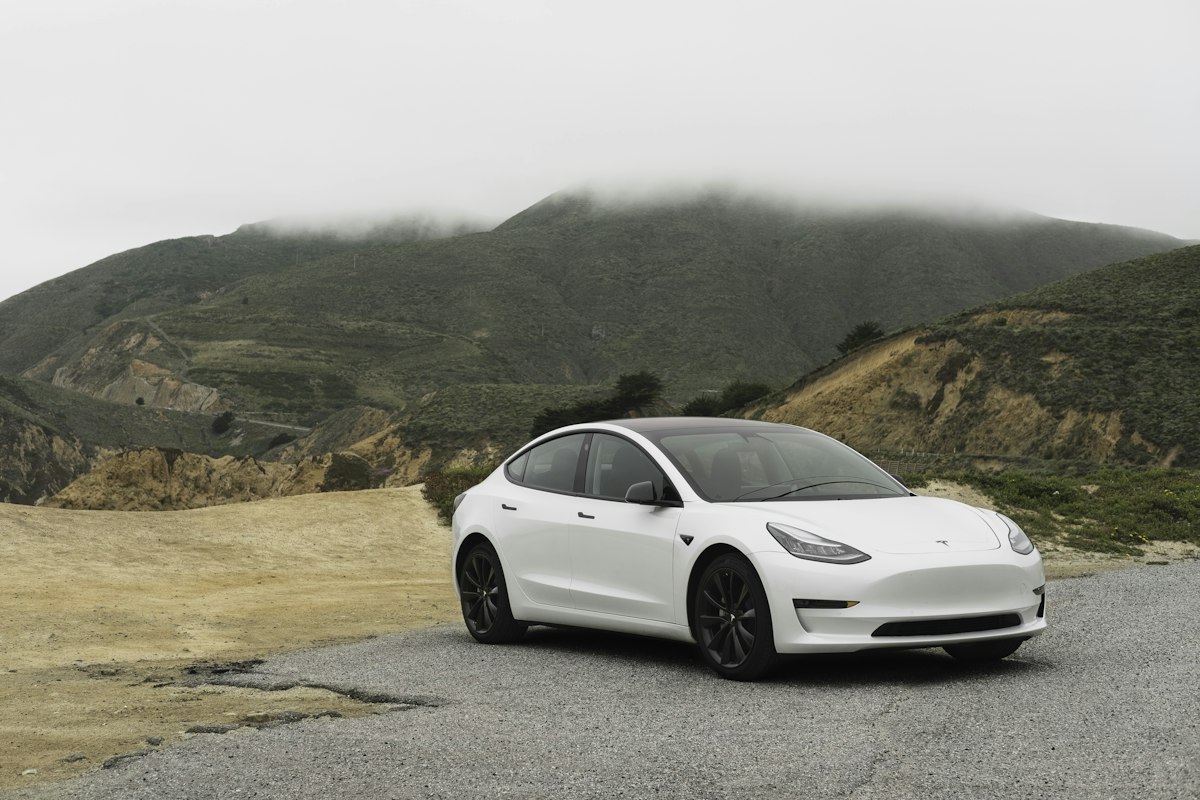
What Tesla taught him was the meeting point of digital product and physical operations — and this was new territory. At Uber, the product was an app connecting two humans. At Tesla, the product was an app connected to a factory, a supply chain, a delivery network, and a two-ton machine that had to show up in someone's driveway.
An order button is easy. Fulfilling the promise behind it is not. In automotive, the product you ship is measured in weeks of waiting, a delivery appointment, a car in a driveway — and the software has to carry that weight end to end. Customer acquisition brought buyers in; order management had to carry them through weeks of waiting, configuration choices, financing decisions, and delivery logistics.
In a normal e-commerce funnel, a lost customer costs a sale. In automotive, a broken order experience costs trust in a purchase people save for years to make. Vasily's team learned to treat every status update, every delay notification, every delivery milestone as part of the product — because to the customer, it was the product. The car was the object. The experience of getting the car was the product.
It also sharpened his instincts for high-stakes consumer funnels. When people spend tens of thousands of dollars online, trust is the product. Every page, every email, every status update either builds it or spends it. There is no neutral. This lesson — that acquisition means nothing without a fulfillment machine behind it, and that trust compounds or collaps with every interaction — now runs through all of his advisory work with founders chasing growth.
Tesla was intense. Everyone who was there will tell you that. But intensity, for someone forged at MIPT and in the pool, was not a shock. It was familiar. The difference was the stakes: at MIPT, the worst case was a failed exam. At Tesla in 2017, the worst case was a failed company — and everyone knew it.
Waymo: Taking Driverless Cars from Research to Revenue (2019–2021)
And then came the hardest problem of all.
From 2019 to 2021, Vasily led product for driverless fleet operations at Waymo — the unglamorous, essential machinery that carries autonomous ride-hailing from promising research to a commercial service running across multiple cities.
There is a moment in every hard technology when the research works in the lab and breaks in the world. Vasily lived inside that moment for two years.
Research answers one question: can the car drive itself? Operations answers the hundred harder ones. What happens when a lane is blocked and no one is behind the wheel? How does a confused rider get help at 2 a.m.? How do you keep a vehicle that needs attention safe without a driver on board? What is the escalation path when the system encounters something it has never seen? Who is responsible — legally, morally, practically — when the machine makes a mistake?
His job was to make autonomy real. Not demo-real. Not press-release-real. Actually real: reliable, safe, and economically viable at scale, across multiple cities, every day.

What those years taught him is simple to say and hard to live: autonomy is an operations problem first and a technology problem second. The breakthroughs that actually matter show up in monitoring, escalation, and human factors — in the systems that keep people safe while machines do the driving.
This conviction is why he is a co-inventor on four granted US patents covering safety systems for the people tasked with monitoring autonomous vehicles. These are not speculative filings. They are granted patents — examined, approved, issued — all assigned to Waymo LLC, all naming Vasily Starostenko as co-inventor:
- US Patent 11,826,146 — "Psychomotor vigilance testing for persons tasked with monitoring autonomous vehicles," granted November 28, 2023. The problem: a human monitoring an autonomous vehicle must maintain vigilance, but vigilance decays. The patent covers systems that test whether the monitor is actually alert — not just present, but cognitively ready.
- US Patent 12,024,206 — "Testing situational awareness of drivers tasked with monitoring a vehicle operating in an autonomous driving mode," granted July 2, 2024. Being awake is not enough; the monitor must understand what is happening around the vehicle. This patent covers testing that situational awareness.
- US Patent 11,912,307 — "Monitoring head movements of drivers tasked with monitoring a vehicle operating in an autonomous driving mode," granted February 27, 2024. Where the head goes, attention follows — or does not. The patent covers systems that track whether the monitor is actually looking at what matters.
- US Patent 11,738,763 — "Fatigue monitoring system for drivers tasked with monitoring a vehicle operating in an autonomous driving mode," granted August 29, 2023. Fatigue is the silent killer of vigilance. The patent covers detecting it before it causes a failure.
Read those titles again and notice what they have in common. They are not about making the car smarter. They are about making the human-machine system safer. They recognize a truth that the hype cycle missed: the hardest part of autonomy is not the driving. It is the handoff — the moments when the human and the machine must function as a team, and the team fails because the human was not ready.

This is the physicist's training applied to the most complex system imaginable: a self-driving car, a human monitor, a city full of unpredictable variables, and the space between them where safety lives or dies. First principles. Where does this break? What are the boundary conditions? The patents are the answers, examined and granted.
It also shaped how he works now. Vasily brings an operator's lens to every conversation about AI and automation — not the hype-cycle version, but the operator's version: what it actually takes to move a system out of the demo and into daily life. A demo is not a deployment. Commercialization is a discipline. The questions he asks first are the ones he learned at Waymo: what breaks at 3 a.m., who is responsible when it does, and how do you prove the system is getting safer instead of just newer?
He is a regular speaker on automation — and when he speaks, it is not about the future. It is about the present: the unglamorous, essential work of making intelligent systems trustworthy. That perspective is rare precisely because so few people have lived on the operations side of autonomy. Researchers publish. Operators commercialize. Vasily's career kept putting him on the commercialize side, and it shows in every question he asks.
Revolut: Leading at Global Scale
After Waymo, Vasily took on his largest leadership challenge: Head of Product at Revolut, reporting directly to the CEO and founder. There he led the global Product and Customer Experience organizations — hiring and scaling teams of over 100 professionals through hyper-growth, from early-stage scale-up to multi-billion-dollar valuation.
If Uber taught him marketplaces and Tesla taught him physical-digital integration and Waymo taught him safety-critical operations, Revolut taught him something equally hard: how to lead at scale. How to build an organization that can ship excellent products when "the team" is a hundred people across multiple countries. How to maintain a culture of rigor and customer obsession when the company is doubling faster than the org chart can keep up.
The through-line across all of it — Reputation.com, Uber, Tesla, Waymo, Revolut — is the operator's education. Each company was a different kind of hard. Each one added a layer. And the layers compounded.

What California Taught Him
California taught Vasily the full arc of a product career: the scrappy growth hacks, the operational grind of scale, and the frontier work where nobody knows the answer yet.
It taught him that the Valley's real curriculum is not in any classroom — not even Stanford's. It is in the shipping. Launch, measure, learn, repeat. That loop became his professional religion, and he practices it with the same discipline he once brought to the pool: show up, do the work, measure honestly, improve daily.
The California years explain the operator he is today: comfortable with ambiguity, allergic to vanity metrics, fluent in the language of both engineers and executives. He arrived as a physicist with an MBA. He left as someone who had helped put driverless cars on public roads and electric cars in driveways — who had owned products that millions of drivers depended on for their livelihoods — and who knew exactly how much work sits behind every overnight success.
He kept the Valley's best habit and left the rest behind: ship, measure, learn. And never confuse a funding announcement with progress.
But California, for all it gave him, was also a chapter that would close. The operator had been formed. The patents were granted. The teams were scaled. And somewhere in the back of his mind, the pattern was stirring again — the pattern from Russia to America: choose the hard crossing, accept being a beginner, apply the discipline, integrate rather than replace.
There was a third language to learn. A third culture to navigate. An island in the Caribbean where nobody expected him, and where he would build again — this time, entirely on his own terms.
Puerto Rico was waiting.
---
Vasily Starostenko advises founders and executives on product strategy, marketplace design, autonomy commercialization, and scaling organizations. His patents and operating experience are available to teams facing the hardest version of these problems.
Continue the conversation: Phone: +1 (650) 523-4953 — tap the call button to reach him directly.
Vasily Starostenko — Consulting
Talk now — free call